
In April 2024, the Government of Canada announced a one-billion-dollar commitment over five years for the development of a national school food program.
Food literacy is an important component of school food programs (SFPs). Research shows that effective SFPs do not just serve meals and snacks to students, they are also integrated directly into the school curriculum (Hernandez et al., 2018) so that students are regularly engaged in learning about food and building connections between the food they eat at school and the content they learn in the classroom.
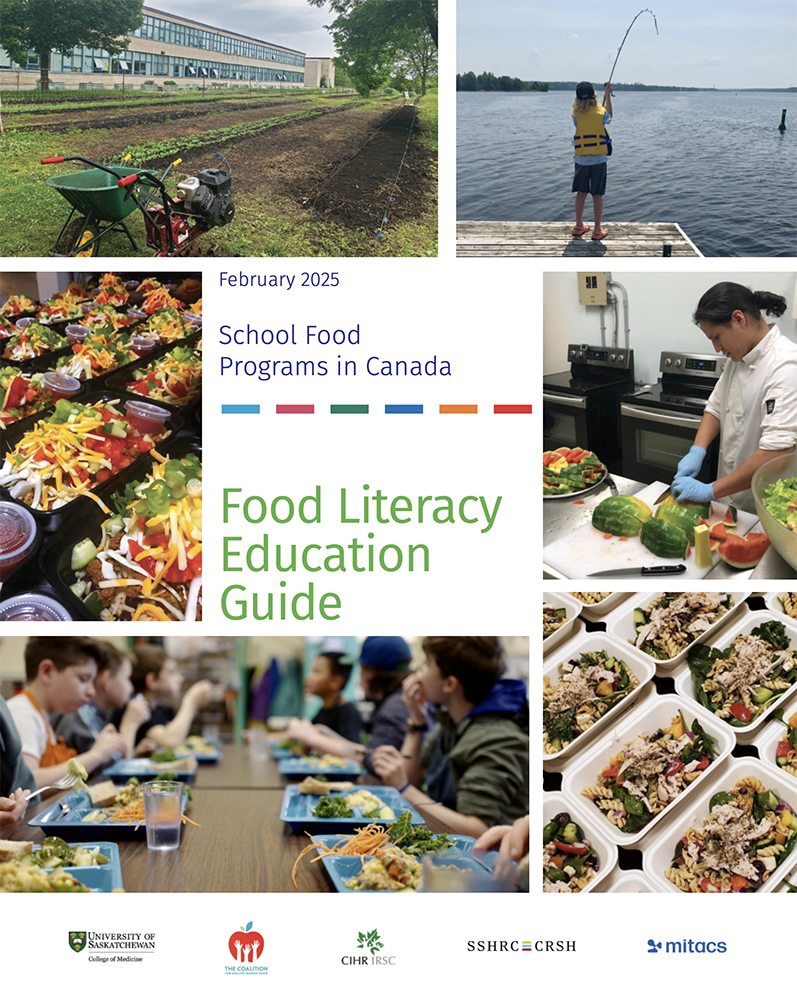
The goal of this “how to” guide is to change that by helping educators and policy makers see the possibilities of food-based learning – planting seeds of inspiration and providing a better understanding of what food literacy is, and how to incorporate it more holistically into the school, the classroom, and the curriculum. This guide will also provide links to dozens of practical resources: food literacy units and lessons, learning and evaluation tools, best-practice recommendations and more.
This is guide #3 a 5-part series of School Food How-To Guides,
led by Dr. Rachel Engler-Stringer and the school food research team from the University of Saskatchewan.