
By Melanie Dussaye, Sustainability Coordinator, Mamawi Atosketan Native School

This is their story. And it is one we hope inspires schools and communities across Canada to imagine what is possible when young people are trusted to lead.
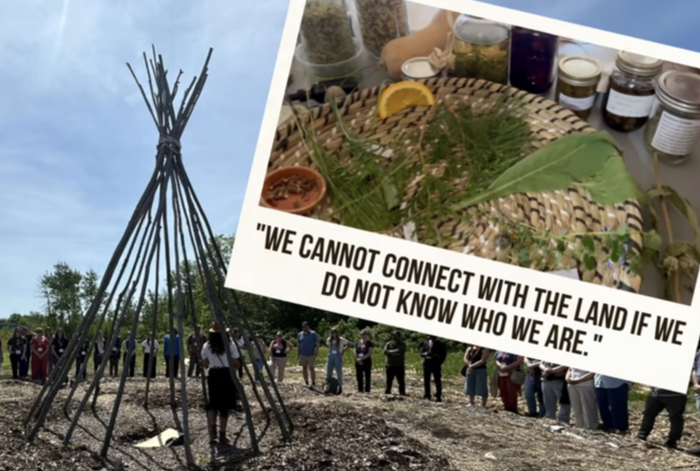
About five years ago, Mamawi Atosketan Native School introduced a small outdoor garden as part of its Agriculture and Land Based Learning program. Tucked into the school’s rural property near Maskwacis, Alberta, the garden gave students their first hands-on experience with growing food, caring for living things, and understanding the relationship between the land and the people who depend on it.
The garden fit naturally into the school’s philosophy. Mamawi Atosketan Native School, whose name means “Working Together” in Cree, has always believed that education should develop the whole person: mind, body, spirit, and community. Growing food was not just a class activity. It was a way of reconnecting students to land-based practices their ancestors had relied on for generations.
Students showed up. They got their hands dirty. And staff noticed something: the garden was doing more than producing vegetables. It was building something in the students themselves.
“During the few short months that they had the gardening program, we were able to give students food to take home and they just really loved that idea.” — Kim Harrington, Principal, Mamawi Atosketan Native School
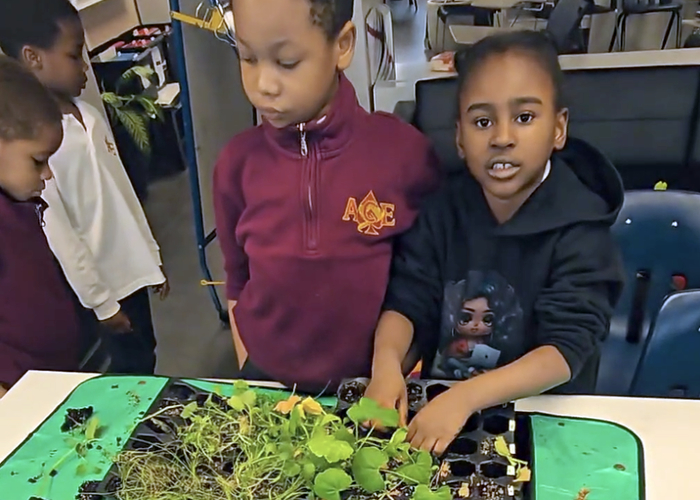
Alberta’s winters are long and unforgiving, and the outdoor garden could only run for a few months each year. Food insecurity, however, does not take a season off. With support from a Fortis Alberta grant, Mamawi Atosketan Native School introduced a small indoor hydroponics program about two years ago, extending the growing season year-round for the first time.
Two Grade 11 students in particular, Elias Mykat of Ermineskin Cree Nation and Kenyon Bull of Louis Bull Tribe, threw themselves into the program under the guidance of sustainability lead Ray Fankhauser and sustainability coordinator Melanie Dussaye.
“These boys just took this whole hydroponics program with more vigor and passion than anybody else at our school had.” — Kim Harrington, Principal, Mamawi Atosketan Native School
That enthusiasm caught the attention of the broader sustainability community. In March 2025, the program was recognized with a GreenUp Award from Fortis Alberta. But for the team at Mamawi Atosketan Native School, it only raised a bigger question: what could they do with more?
As student engagement grew, so did the vision. Ray Fankhauser began researching what a larger, truly year-round system might look like. He and Melanie Dussaye held multiple meetings, visited existing facilities, and explored different container farming technologies. What they were looking for was practical, climate-resilient, and suited to a school setting in the heart of Alberta.
They found their answer in Growcer, a Canadian-made modular vertical farming system built to operate in temperatures from -40°C to +40°C. Growcer’s Osiris® farm is a 40-foot climate-controlled container that uses deep water culture (DWC) hydroponics to grow leafy greens, herbs, brassicas, and other crops year-round. It requires only electricity, water, and a level piece of ground.
“All you need is electricity, water, and obviously a level piece of ground, so that project became a dream for us.” — Ray Fankhauser, Sustainability Lead, Mamawi Atosketan Native School
Students were involved throughout the process, not just as observers, but as participants in shaping what the project would become. Their enthusiasm was part of what convinced the team that the Growcer model was the right fit: it was something students could actually run themselves, learning skills in crop production, environmental monitoring, and food distribution that connected directly to both modern science and Indigenous values around stewardship and care for the land.
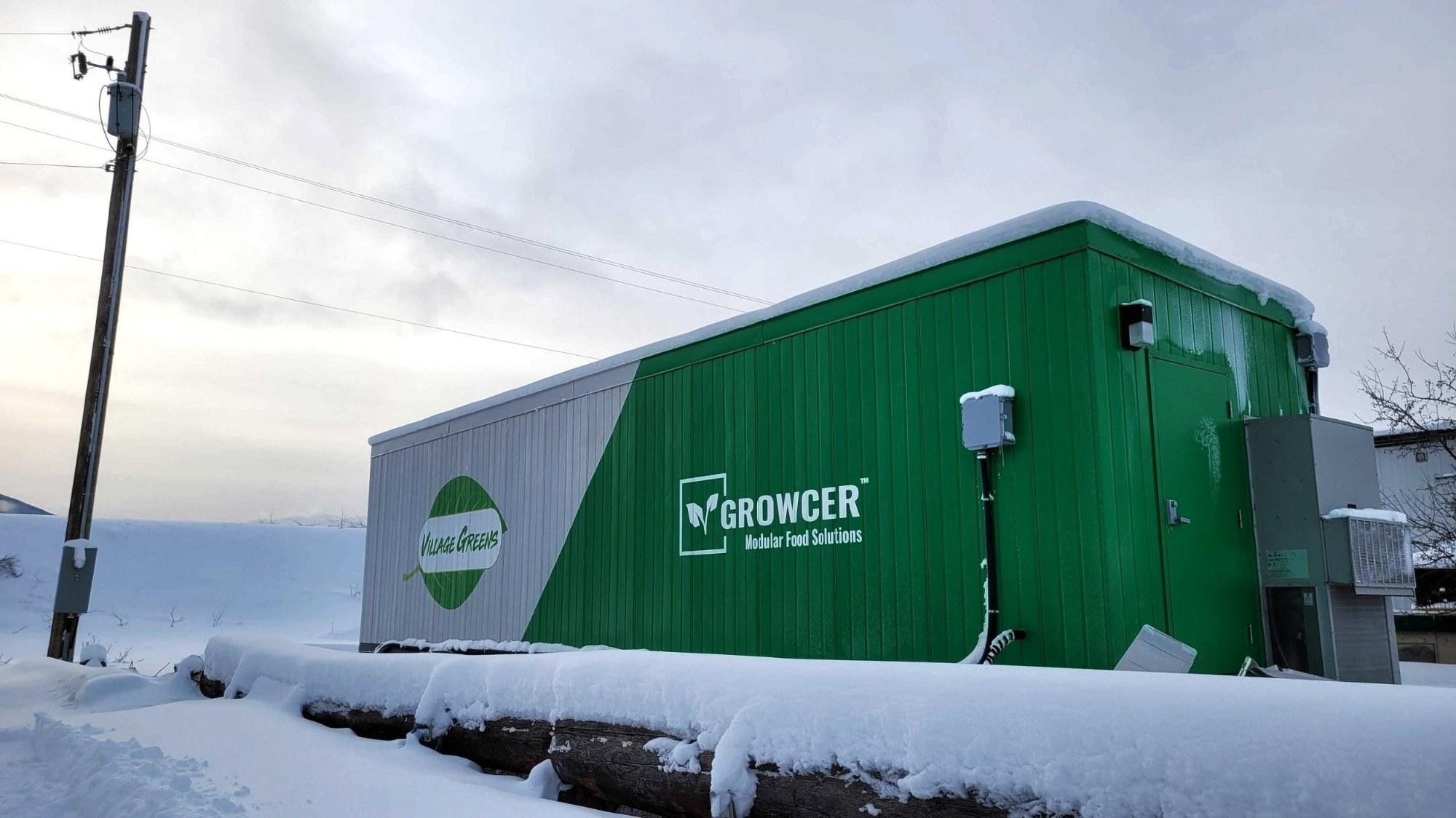
Mamawi Atosketan Native School submitted its Growcer Farm Project to the 2026 Zayed Sustainability Prize, one of the world’s most prestigious sustainability awards. The school was the only North American finalist in its category.
On January 13, 2026, at the Abu Dhabi Sustainability Week opening ceremony, UAE President Sheikh Mohamed bin Zayed Al Nahyan presented the award to the Mamawi Atosketan Native School delegation. The school won USD $150,000 in the Global High Schools – The Americas category.
Elias and Kenyon were in the room when their school’s name was called.

“We flew all the way over and we got ready for the conference and award ceremony and when they picked our name, I was just shocked and surprised.” — Kenyon Bull, Grade 11, Louis Bull Tribe

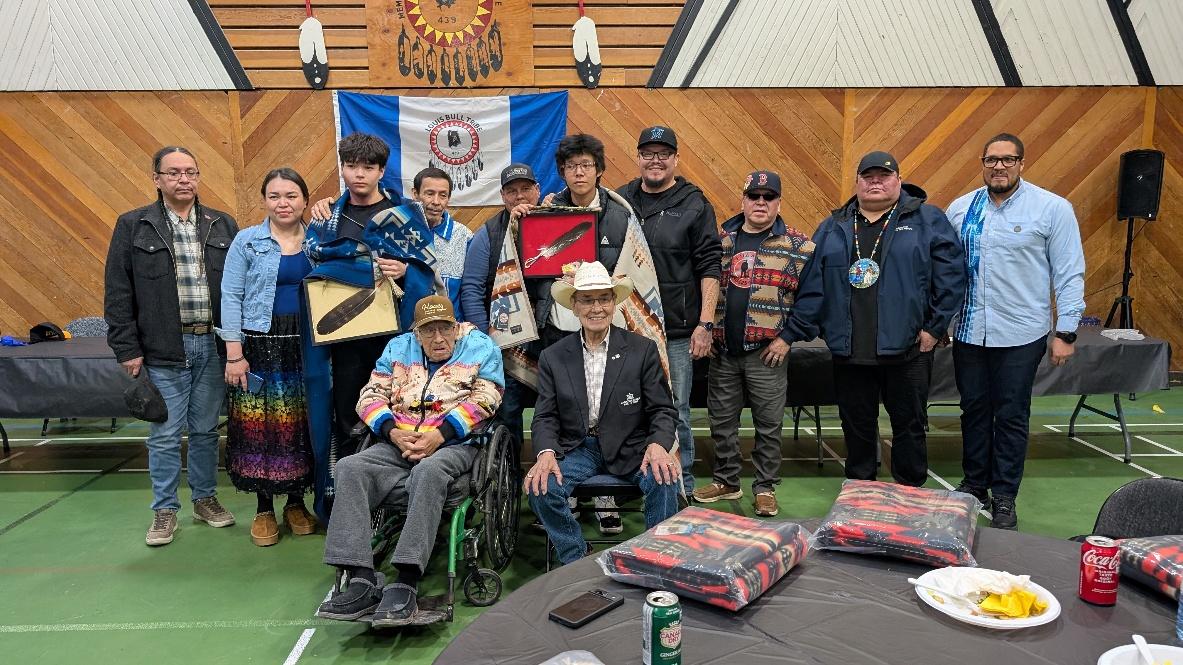
Back home in Maskwacis, students and community members gathered for a watch party. The Louis Bull First Nation and Ermineskin Cree Nation held an honour ceremony for the two boys upon their return, presenting them with blankets, sweetgrass, and eagle feathers. Chief and Grand Chief Willie Littlechild attended.
The recognition rippled outward. Councillor Izaiah Swampy-Omeasoo of Samson Cree Nation, a Mamawi Atosketan Native School alumnus, wrote to the students and staff:
“As a former student of Mamawi Atosketan, I can attest to the commitment and love the staff of the school have towards their students. Continue on with your education, for they will not stop believing in you.” — Councillor Izaiah Swampy-Omeasoo, Samson Cree Nation
Mayor Kevin Ferguson of Ponoka also wrote to the school:
“Our world is truly being passed on to a generation with good hearts and capable hands.” — Kevin Ferguson, Mayor of Ponoka
The $150,000 prize will fund the installation of the Growcer modular hydroponic farm, expected to arrive at the school in spring 2026. Once operational, the farm is projected to produce over 5,000 pounds of fresh vegetables annually, growing lettuce, leafy greens, herbs, and other crops, while saving an estimated 70,000 litres of water per year compared to conventional farming.
Students will manage all aspects of the farm: seeding, monitoring growing conditions, harvesting, and distributing produce. Fresh vegetables will support the school’s lunch program and monthly soup kitchen, with surplus shared with community food programs across Maskwacis. The farm will be integrated into a for-credit agriculture program blending Indigenous values with sustainability science, giving students hands-on experience in STEM, leadership, and environmental stewardship.
By year two, the program is expected to be fully embedded in coursework, with senior students mentoring younger peers. The goal is for the farm to become self-sustaining, serving as a model that other Indigenous schools facing similar challenges can replicate.
Kenyon Bull, who will graduate before the farm reaches full operation, has thought carefully about what that continuity means:
“I just want to help other students get to know how it works, so when I graduate, there will be other students to keep helping the other generations, so it’ll just go on and on.” — Kenyon Bull, Grade 11, Louis Bull Tribe
What makes this project resonate so deeply, for F2CC, for Mamawi Atosketan Native School, and for the communities it serves, is that it has never been only about vegetables.
Food insecurity in Maskwacis and surrounding communities is real. But so is something harder to measure: the disconnection that many Indigenous youth feel from the land, from traditional knowledge, and from a sense that their ideas and actions can matter. The Mamawi Atosketan Native School hydroponic farm project is, at its core, an act of restoration. It reconnects students to food. It reconnects them to land. And it shows them, concretely, that they have something valuable to contribute.
“For us, this project is not only about food, but also about possibility. It’s about empowering young people to see that their ideas matter, their actions make a difference, and their voices can create real change.” — Melanie Dussaye, Sustainability Coordinator, Mamawi Atosketan Native School
“It kind of ignited a passion for gardening for me.” — Kenyon Bull, Grade 11, Louis Bull Tribe

That passion, and the school’s commitment to nurturing it, is what the Zayed Sustainability Prize recognized.
“Being recognized at this level reminds us that even a small school in rural Alberta can have a global impact when passion and purpose come together.” — Melanie Dussaye, Sustainability Coordinator, Mamawi Atosketan Native School
To learn more about Mamawi Atosketan Native School, visit mans1.ca. To learn more about Growcer, visit thegrowcer.ca. To explore resources for bringing local food into your school, visit farmtocafeteriacanada.ca.
Based on the experience of Mamawi Atosketan Native School, Maskwacis, Alberta
When Mamawi Atosketan Native School began exploring how to grow food year-round in central Alberta, they needed a solution that could handle extreme winters, operate within a school setting, and be managed by students. They found it in Growcer, a Canadian modular vertical farming system. This tipsheet explains how the technology works and what schools should know before pursuing a similar path.
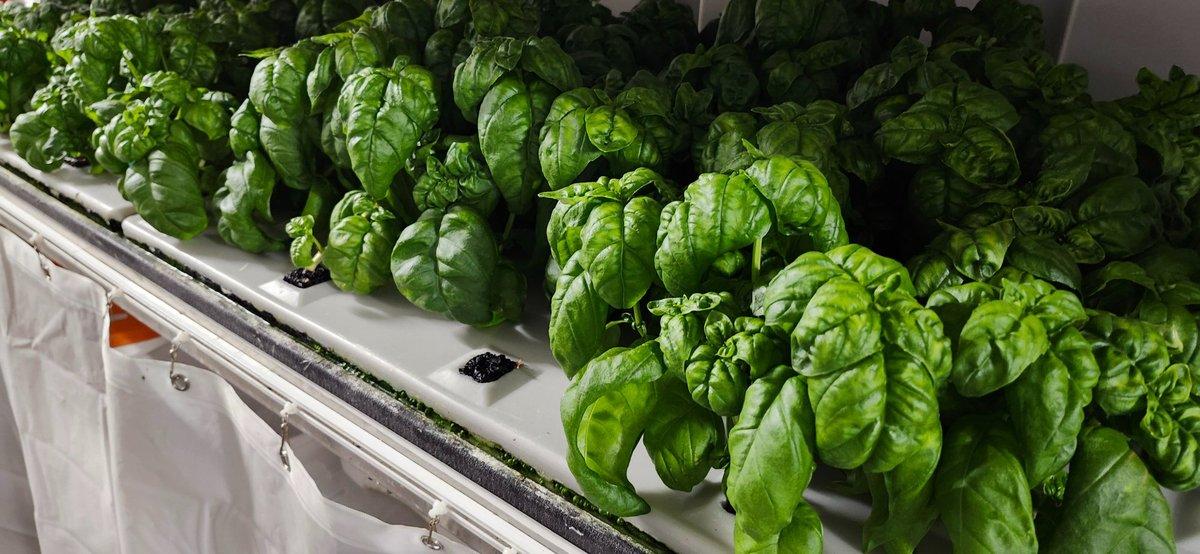
A Growcer farm is a repurposed 40-foot shipping container transformed into a climate-controlled growing environment. Inside, plants grow in vertical towers using deep water culture (DWC) hydroponics, a method where plant roots are suspended in nutrient-rich, oxygenated water rather than soil. LED lighting replaces sunlight, and sensors monitor temperature, humidity, and nutrient levels continuously.
The system is built to operate anywhere, in any climate, at any time of year. It uses approximately 1,900 to 2,500 litres of water per month, a fraction of conventional farming, because water is recirculated continuously throughout the system.
What it can grow
The Growcer system can produce lettuce, leafy greens, herbs, brassicas, and some cultural crops. Varieties grown by current Growcer operators include arugula, romaine, spinach, kale, collard greens, Asian greens, mint, parsley, cilantro, Thai basil, and mountain sorrel. The team at Mamawi Atosketan Native School also plans to experiment with a wider range of crops and is eager to explore growing strawberries.
Projected output
At full operation, the Growcer farm at Mamawi Atosketan Native School is expected to produce over 5,000 pounds of fresh vegetables annually, saving an estimated 70,000 litres of water per year compared to conventional field farming.
Ray Fankhauser, sustainability lead at Mamawi Atosketan Native School, and sustainability coordinator Melanie Dussaye evaluated multiple options before settling on Growcer. Several factors made it the right fit for their school and community.
Tip 1: Climate resilience
Alberta winters reach -40°C. The Growcer Osiris® unit is designed to withstand temperatures from -40°C to +40°C, making it one of the few systems that can operate reliably year-round in Alberta without additional infrastructure.
Tip 2: Minimal site requirements
The farm needs electricity, a water connection, and a level piece of ground. No greenhouse, no new building, no major construction. For schools with limited space or capital budgets, this matters.
Tip 3: Student-operable
The system is designed to be managed by non-experts. Growcer provides hands-on Rootcamp training, on-site support at delivery and first seeding, and 24/7 remote monitoring of farm conditions. Students at Mamawi Atosketan Native School manage all aspects of the operation, from seeding to harvest to food distribution.
Tip 4: Canadian-made and Indigenous-community tested
Growcer is a Canadian company with a dedicated Indigenous communities program. A number of First Nations and Indigenous organizations across Canada already operate Growcer farms, including Sheshegwaning First Nation, Squamish Nation, and Norway House Cree Nation. Mamawi Atosketan Native School joins a growing community of practice.
Tip 5: Modular and scalable
The system is designed to grow with a program. Additional units can be added as a school’s capacity, funding, and ambitions expand.
For Mamawi Atosketan Native School, the Growcer farm is not a standalone technology project. It is embedded in the school’s Agriculture and Land Based Learning program, integrated with Indigenous values around stewardship and food sovereignty, and connected to community need through the school’s lunch program and monthly soup kitchen.
This integration is what made the project compelling to the Zayed Sustainability Prize judges, and what makes it transferable to other school contexts. The technology is the vehicle. The community vision is what drives it.
Learn more about the Growcer system at thegrowcer.ca. Learn more about Mamawi Atosketan Native School at mans1.ca.
Practical guidance for schools contemplating an indoor growing program
Mamawi Atosketan Native School did not arrive at a Zayed Prize-winning hydroponic farm overnight. The journey took five years, two grants, a lot of student energy, and a team willing to keep asking: what comes next? This tipsheet shares the practical lessons from that journey for schools thinking about starting something similar.
Tip 1: Start where you are
Mamawi Atosketan Native School began with a small outdoor garden: modest, seasonal, and entirely manageable. That garden gave students their first relationship with growing food and gave staff a chance to see what resonated. It also gave the school a track record that made future grant applications credible.
You do not need a container farm to start. A few raised beds, a windowsill herb garden, or a small classroom hydroponic kit can be enough to build interest, identify your champions, and learn what your students and community actually want from a food program.
Tip 2: Find your champions early
At Mamawi Atosketan Native School, two students, Elias Mykat and Kenyon Bull, became the face and the energy of the hydroponic program. They were not recruited or assigned. They showed up, leaned in, and led. Staff recognized that and made space for their leadership.
Look for the students who light up around the garden. Involve them in planning, in grant applications, in visits to other operations. When students have genuine ownership, the program takes on a life of its own.
Tip 3: Root the program in community need and cultural context
Mamawi Atosketan Native School did not frame its hydroponic farm as a science experiment or a technology showcase. They framed it as a food sovereignty initiative, one grounded in Indigenous values around the relationship between people, land, and food. That framing was honest, and it was powerful.
Before designing your program, ask: What does food security actually look like in our community? What traditional relationships with food and land can we honour and build on? What will students do with what they grow? Connecting the program to real community need, whether that is a school lunch program, a local food bank, or a community soup kitchen, is what makes it matter.
Tip 4: Build your funding step by step
Mamawi Atosketan Native School’s path to the Growcer farm involved multiple funding sources over several years: a Fortis Alberta grant to start the classroom hydroponics program, and then the Zayed Sustainability Prize to fund the container farm. Each step made the next one possible.
Look for local and regional grants tied to sustainability, food security, Indigenous programming, or education innovation. Farm to Cafeteria Canada maintains resources and grant information for schools pursuing farm-to-school programs. Local utility companies, community foundations, and provincial agriculture programs are also worth exploring.
Tip 5: Do your research on the technology before you commit
Ray Fankhauser and Melanie Dussaye visited existing operations, held multiple planning meetings, and evaluated several systems before choosing Growcer. That due diligence mattered. Container farms require electricity, water connections, site preparation, and ongoing operating costs, as well as trained operators.
Key questions to ask before choosing a system: What crops can it grow, and are they crops your community will actually eat? What are the full operating costs, including electricity and consumables? What training and ongoing support does the supplier provide? What happens when something breaks down? Can students realistically operate it?
Tip 6: Plan for continuity from the beginning
One of the most thoughtful things Kenyon Bull said about the program was this:
“I just want to help other students get to know how it works, so when I graduate, there will be other students to keep helping the other generations, so it’ll just go on and on.” — Kenyon Bull, Grade 11, Louis Bull Tribe
Student-led programs face a built-in challenge: students graduate. Build in a plan for peer mentorship, documented procedures, and a rotation of students trained to operate the system. The program should outlast any individual, no matter how dedicated.
Tip 7: Share what you learn
Mamawi Atosketan Native School submitted their project to the Zayed Sustainability Prize partly because they believed their story and their approach could inspire others. They were right. If your school builds something meaningful, tell the story. Enter awards. Write blog posts. Connect with Farm to Cafeteria Canada and other food literacy networks. One school’s garden can plant seeds in communities across the country.
To learn more about Mamawi Atosketan Native School and the Growcer Farm Project, visit mans1.ca.