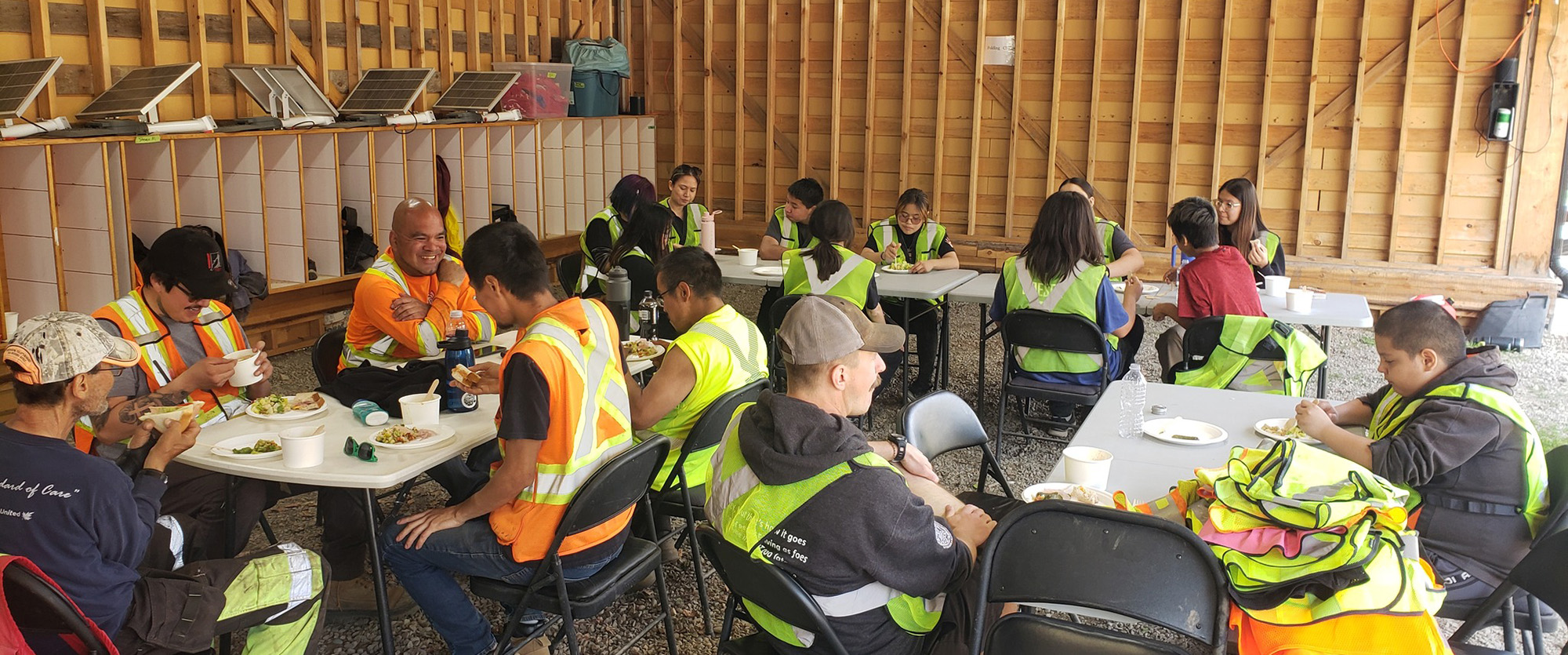


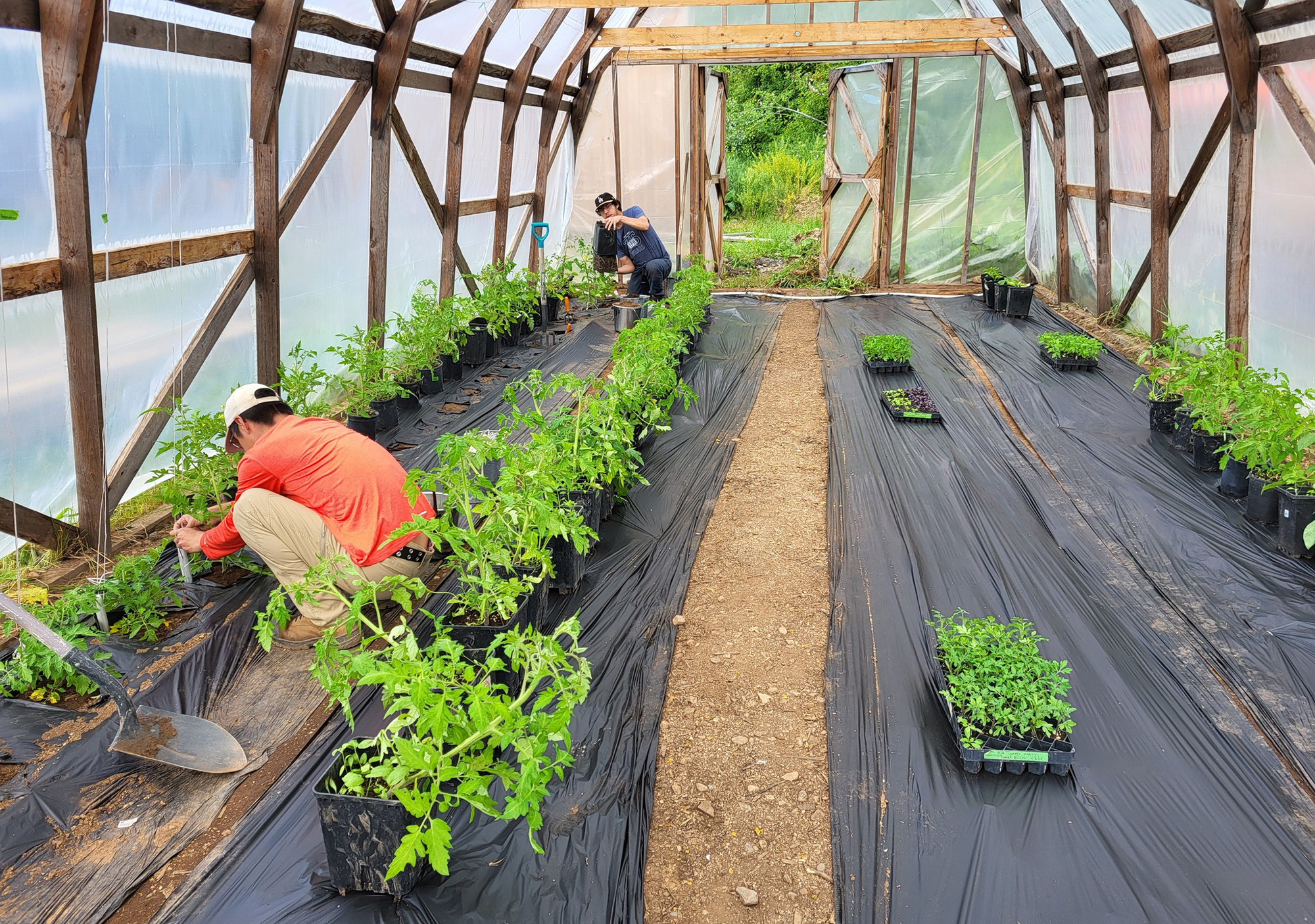
From planting in greenhouses and preparing garden beds to identifying native plants and practicing traditional ethnobotany, participants explored how food sovereignty is rooted in both cultural knowledge and modern farming techniques.
“It’s about more than growing food — it’s about growing the next generation of leaders who understand where their food comes from.”
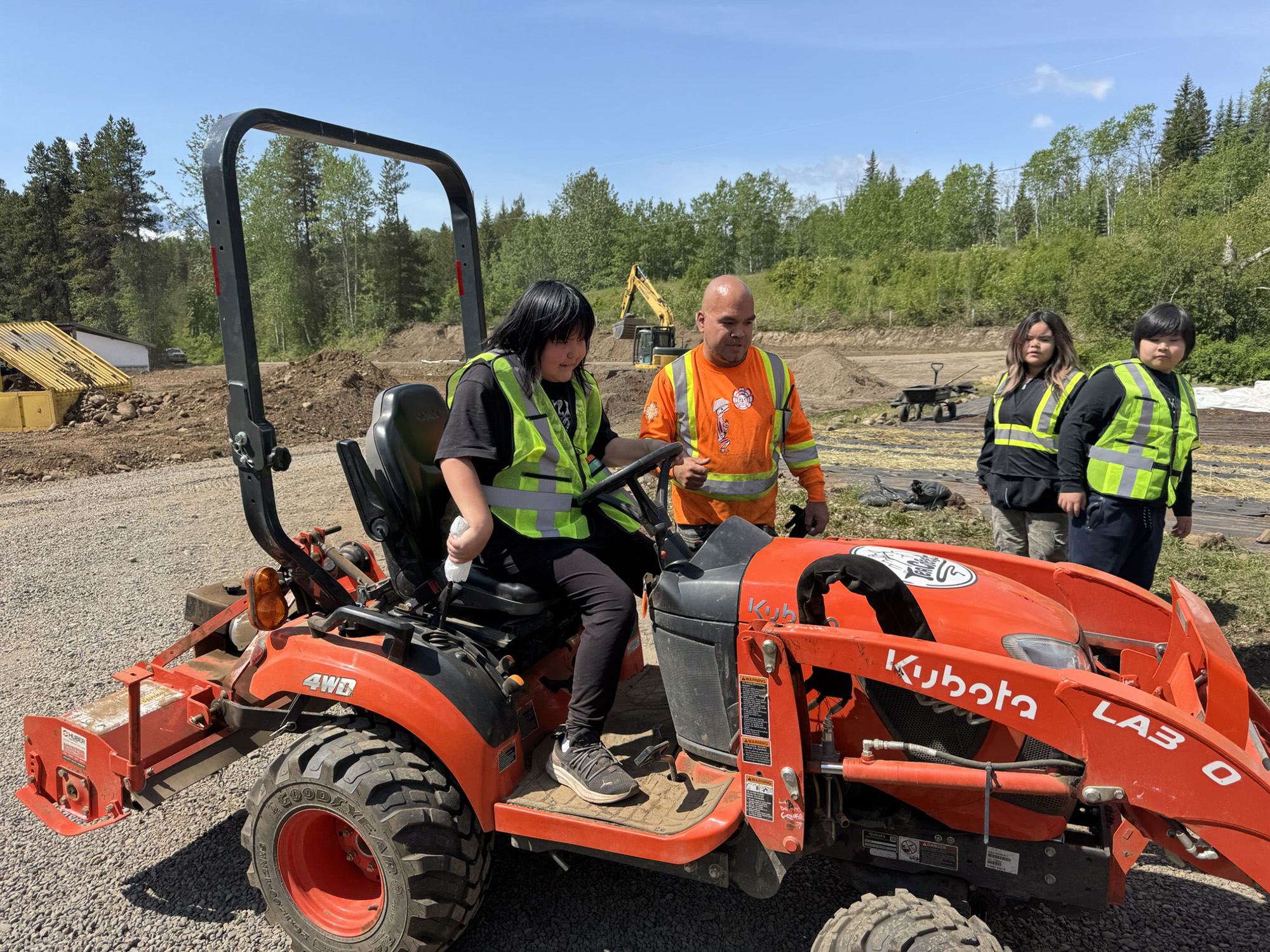
Youth also had the chance to see farming as a skilled trade, learning carpentry for building garden beds and safe operation of tractors and other equipment. This intersection of tradition and trade gave students a broad view of the opportunities within Indigenous-led agriculture.
“Our youth left with not just knowledge, but pride — knowing they are part of a living food sovereignty movement.”
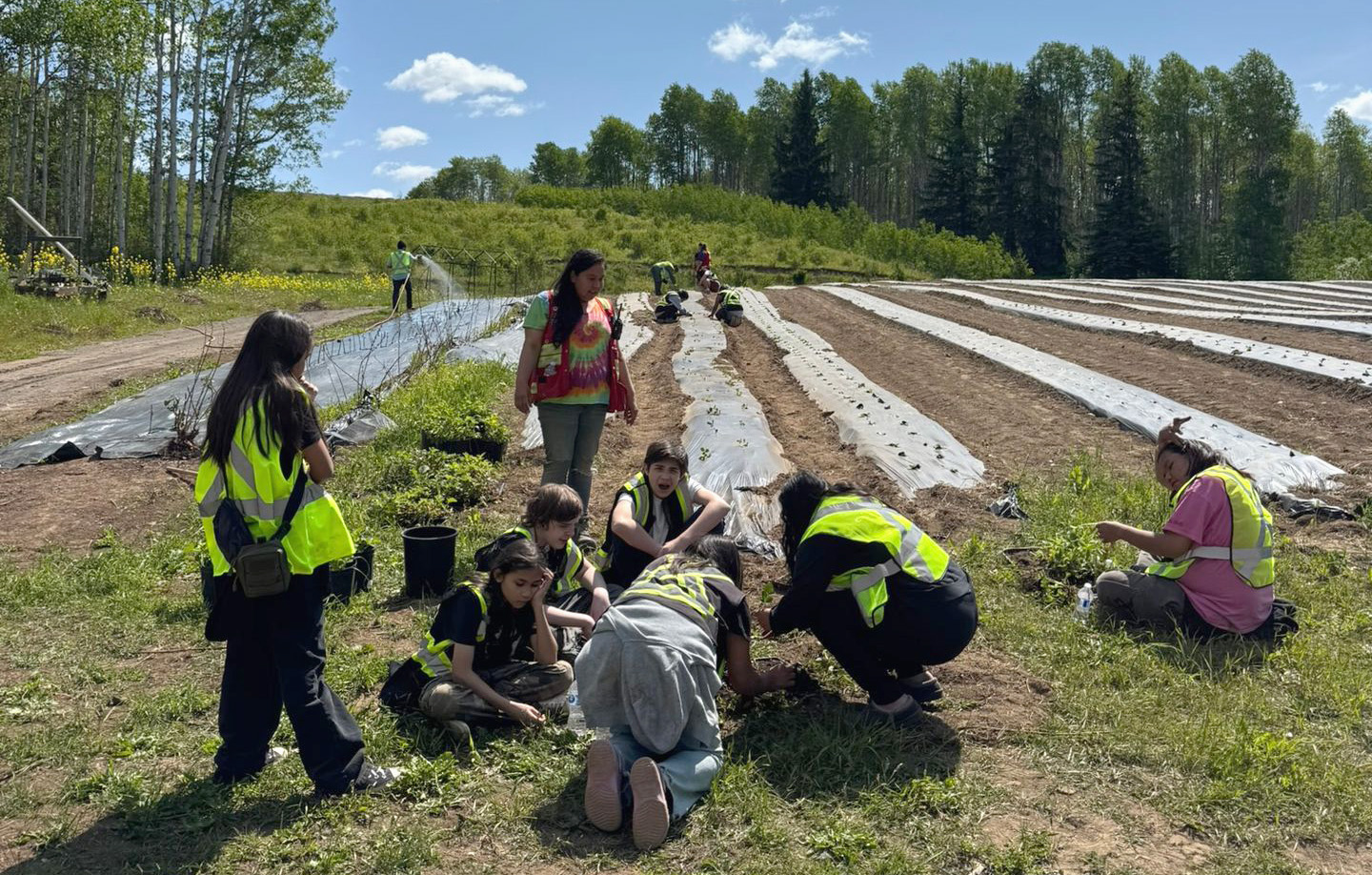
Groups ranged from elementary school classes to alternate high school programs, and even youth in care through the Gitxsan Child and Family Services men’s group. The mix of participants created a space for shared learning and community building.
The success of this program shows how Indigenous-led initiatives can revitalize cultural practices, equip youth with lifelong skills, and strengthen food systems for the future. Tea Creek’s work demonstrates that when youth are given the tools, knowledge, and inspiration, they can become powerful stewards of both the land and their communities.