

Simonds High School, Saint John, NB
Grant term, 2024-2025
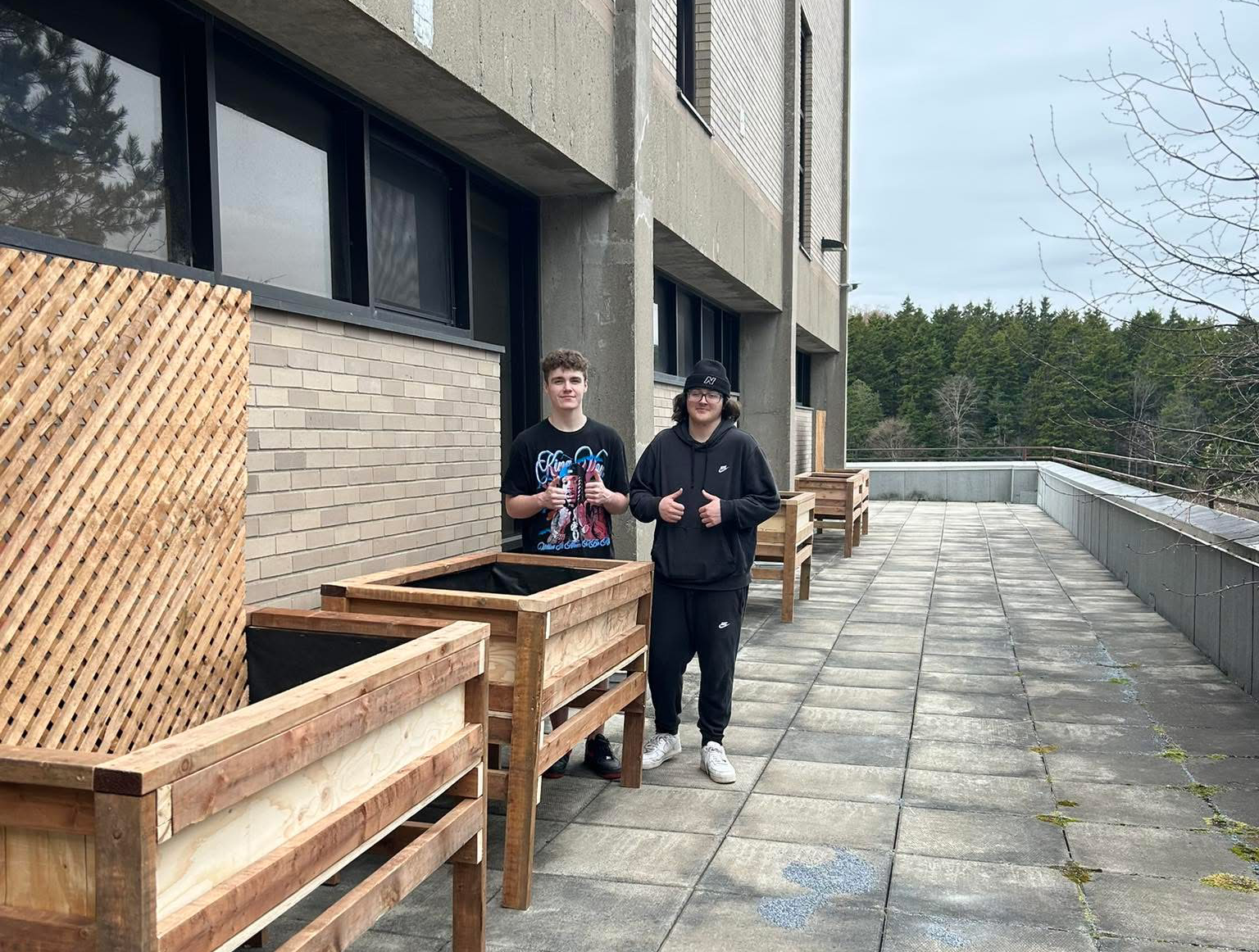
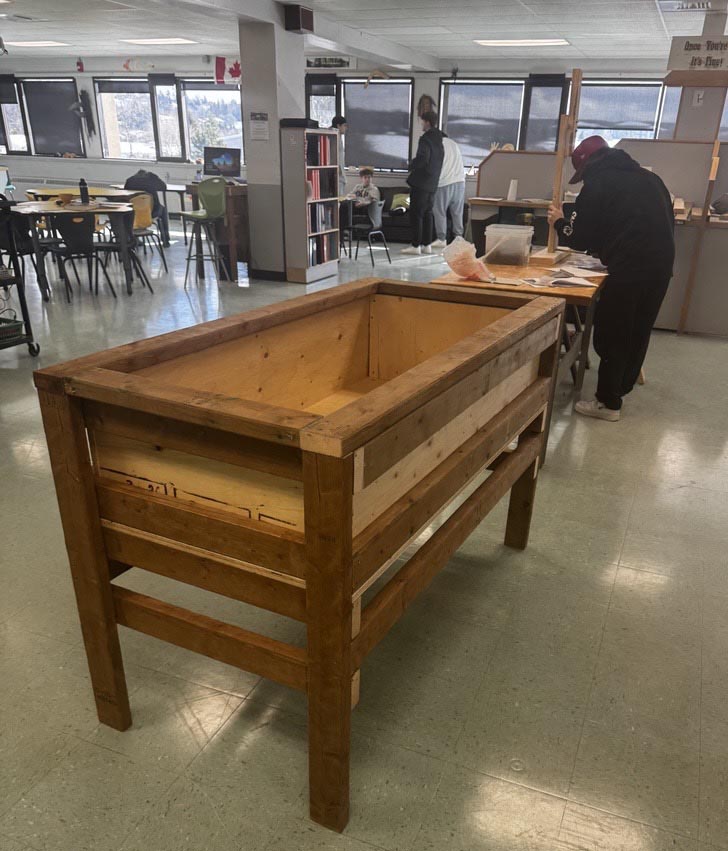
The project was headed by our Essential Skills class, where several students undertook the task of designing and constructing raised garden beds to support our new school Gardening Club as part of their year-end Capstone projects. Leland F explained, “The purpose of my project was to build vegetable planters for climbing plants for a school gardening club. They will help the gardening club learn how to grow vegetables for food.” These particular beds were specifically designed to accommodate climbing plants such as beans and peas, providing a practical learning environment for students interested in horticulture and sustainability.
Another student, Rhyland T., shared: “The purpose of my project was to help the school with a place to grow healthy food. It provides an opportunity for students to learn how to grow and tend to the vegetable plants. Another student had created a planter, but it had no liner, and Ms. Haggerty needed four more planters with liners. My job was to build two planters and problem-solve the liner.” Rhyland’s initiative highlights the problem-solving and critical thinking skills that students developed throughout the project.
The new Gardening Club, led by faculty advisor Ms. Carol-Ann Haggerty, will become a vibrant part of our school community. Weekly meetings offer students the chance to engage in various gardening activities, learn about composting, plant care, and sustainability, and build connections with peers in a supportive outdoor setting. This initiative has not only enhanced our school’s physical environment but also fostered a sense of ownership and pride among students.
Mr. John Pomeroy, Essential Skills teacher, also played a crucial role in guiding students through the construction process of the raised garden beds as their final Capstone Projects. His mentorship and dedication were instrumental in bringing the project to fruition.
Situated along the Bay of Fundy, Saint John is a historic port city with a strong working-class identity and an ever-increasing culturally diverse population. Our community, like others in the province, faces challenges related to food insecurities and socio-economic disparities. This gardening project will continue to provide students with a tangible way to address these issues while promoting food literacy and community connectedness. The Dig In! Seed Grant will enable our students to cultivate more than just vegetables as it nurtures a culture of collaboration, responsibility, and care. We are grateful for the opportunity to grow together and look forward to expanding our gardening initiatives in the future.