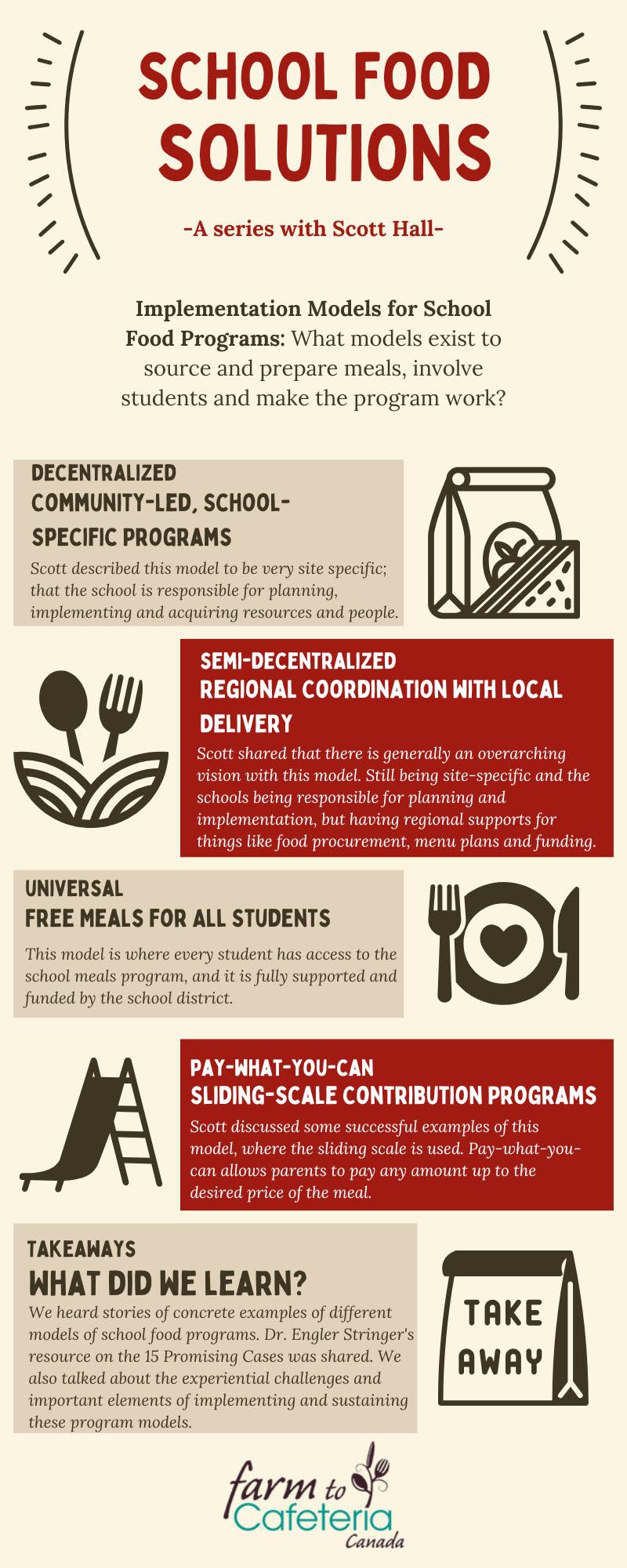


In Session Three, Implementation Models for School Food Programs, Scott discussed various ways to deliver school food programs. The decentralized model consists of site-specific programs, where the schools are primarily responsible. The semi-decentralized model emphasizes regional coordination with local delivery.
The universal model provides free meals for all students, while the pay-what-you-can sliding-scale contribution model focuses on inclusivity over stigmatized models. Examples of the different models currently running in schools were shared, alongside more about managing and acquiring resources, funding and other challenges like food safety, dietary needs and other barriers. Important elements were having dedicated staff and an emphasis on community engagement.
Scott also referenced the 15 promising cases report from the University of Saskatchewan during the conversation.