
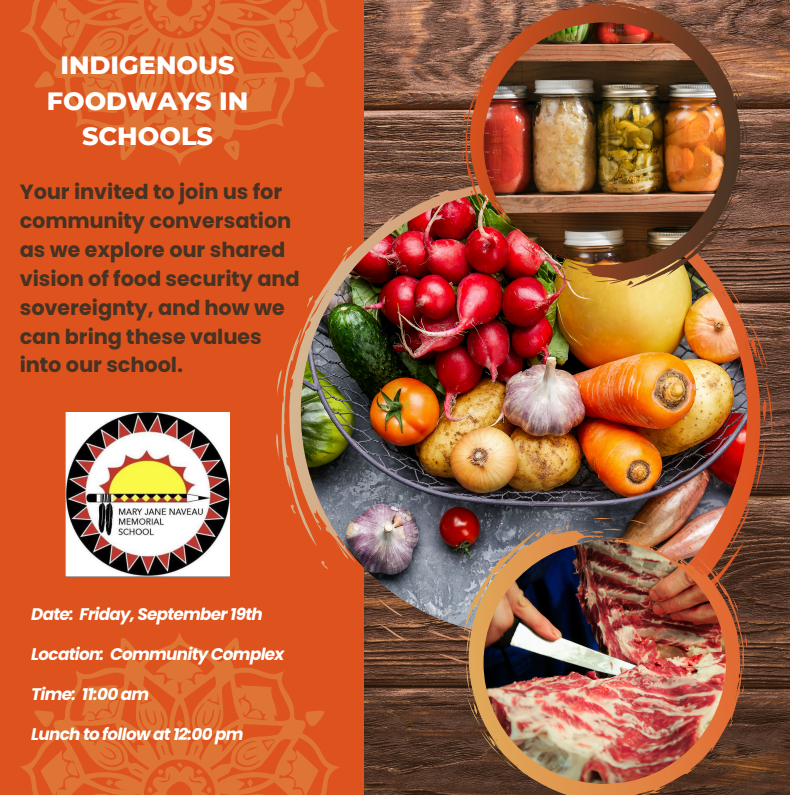
At Farm to Cafeteria Canada, we are honored to support school communities as they define their own paths toward food sovereignty. Recently, Mary Jane Naveau Memorial School (MJNMS) in Mattagami First Nation, Ontario hosted an inspiring Community Conversation, a key component of their journey within our Indigenous Foodways in Schools grant stream.
The event, held on September 19, 2025, at the Community Complex, brought together Elders, students, and staff to explore how MJNMS can further integrate traditional teachings and food security into the daily lives of its students.
Listening to the Heart of the Community
During the session, the MJNMS team presented the grant’s goals and asked community members to rank their priorities for the school’s future food projects.
The community’s vision was clear:
- 40% of participants identified a Food Forest in the school yard as their top priority.
- 19% emphasized the importance of inviting Elders and Indigenous speakers to share knowledge with students.
- 15% voted for a School Yard Garden, while another 15% focused on developing the interior of the greenhouse.
- 11% highlighted the need for essential school supplies to support these initiatives.
Traditional Skills and Land-Based Learning
Beyond the rankings, the conversation unearthed a deep-seated desire for land-based education that reflects the heritage of Mattagami First Nation. Participants shared a wide range of creative and practical ideas, from building a smokehouse to establishing a wash station behind the school to process fresh harvests.
Specific community requests included:
- Traditional Harvesting: Engaging students in hunting and processing game, which led to the identification of a need for a walk-in cooler and space to hang a moose.
- Food Preservation: Practical workshops on canning, smoking, and dehydrating foods to help families stock up for winter.
- Land Access: Utilizing boats and snowmachines for field trips to ensure students can learn directly from the land in all seasons.
One student captured the spirit of the day perfectly, stating simply: “I would like to learn canning, planting, etc.”
Building a Sustainable Roadmap
The feedback gathered during this conversation is now being used to create a strategic roadmap for MJNMS. As the community noted, success will require a collective effort, including a large kitchen for meal preparation and designated individuals to care for the gardens and food systems.
“All these ideas are very good and hopefully will take place,” shared one participant. At Farm to Cafeteria Canada, we share that hope and are committed to supporting MJNMS as they move from these powerful discussions into action.
Gratitude and Next Steps
We want to thank Tracy Harnack and the entire MJNMS team for their tireless work in organizing this session. Most importantly, we thank the community members of Mattagami First Nation for their honesty and vision.
By centering the voices of Elders and youth, Mary Jane Naveau Memorial School is doing more than just planning a garden; they are cultivating a legacy of food sovereignty and cultural revitalization.